
Teaching: On Sitting Meditation
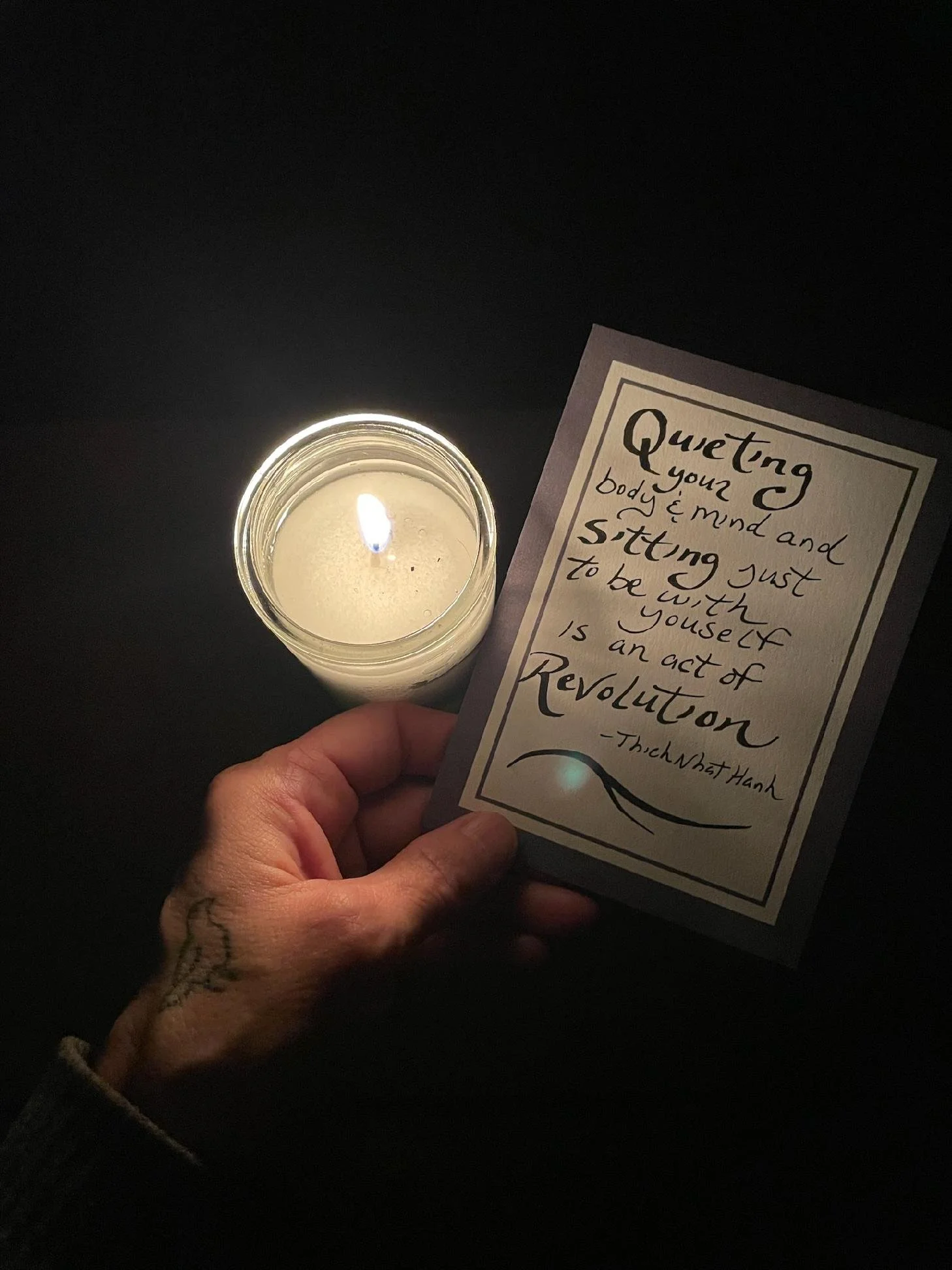
Paradox alert.
Approaching the practice of sitting meditation with thoughts or goals of attaining something or changing ourselves is a surefire way to make the going much harder, if not entirely impassable. And. When practiced regularly and ongoingly, engaging in meditation will change us, and we will attain things.
I think the practice of sitting meditation is quite challenging to talk about and put into words. Because as soon as we put words to what it is and what we’re doing when we meditate, it tends to either reduce and limit it to a physical activity only or it causes us to over-intellectualize or over-strategize or over-philosophize the whole affair.
While I do think it’s helpful to know what the benefits of sitting meditation are, what’s not only not helpful but often actively harmful is regarding meditation as medication. And. At the same time. The practice of sitting meditation is a kind of medicine. It’s good medicine for our spirit, our heart, and our soul.
I am someone who firmly believes that sitting meditation is not for everyone. I would never go around suggesting that anyone, let alone everyone, meditate. In my view, nothing - absolutely nothing - is for everyone. I believe in acknowledging, honoring, and sincerely respecting the diversity of humans.
And.
I also think that many or even most of us would be very well-served and supported by developing and maintaining a regular, ongoing & steady practice of sitting meditation. Or something akin to it.
It is very easy and super common to come up with reasons not to sit (meaning sit and practice meditation). But I would argue that the reasons we come up with are precisely why it would be both good and important for us to do it.
The two most common things I’ve heard from folks about the practice of sitting meditation over the almost 24 years of attending sangha every week, going on extended retreats, and chatting with people in a variety of places centers on the following: 1) folks feel their mind is more active than everyone else’s and they think they literally just can’t do it or 2) they significantly undervalue or misunderstand it all together.
The practice of sitting meditation is the practice of coming back home to ourselves. Of reconnecting with what is alive, present, available, and possible in the here and the now. Of remembering what it is we’re doing, how we’re feeling, what’s most important, and what direction we truly want to be moving in. Sitting meditation is the foundation for living a more awakened and more connected life.
I consider having a regular, steady practice of sitting meditation to be one of the utmost important things I do with my time. I can’t fully explain the why’s of if, but having an ongoing practice of meditation helps me to feel a genuine sense of grounding and balance even when I’m going through a lot of stress or heightened hardships. It helps me to feel into the deep river of ease and joy that is always present and available, regardless of what is going on externally. Not in a bypass sort of situation, but with an increased capacity to feel into the pain and suffering of myself and/or others while not being swept up and away by it.
I feel strongly that the practice of sitting meditation can offer many people a great deal of the support and nourishment we’re all interested in and searching for. We all share a universal need to feel a sense of belonging and connection. And if we don’t belong first and foremost to ourselves, if we’re not spending time connecting with ourselves, I think it is virtually impossible to feel a true sense of belonging and connection with others and the world. Sitting meditation helps us to establish a deep felt sense of belonging and connection with and within ourselves, which will usher us to feel genuinely at home in the world.
Sitting meditation is not a quick fix or a life hack situation. If that’s what you’re looking for, you will be sorely disappointed. The practice of sitting meditation is also not about being happy or peaceful or loving all the time. If you start sitting and keep sitting, hard stuff will come up. Uncomfortable stuff will arise. Stuff you thought you healed way back when will come up too. Most of the time when you go to sit, you won’t want to do it. You’ll come up with 10 really good reasons not to do it and why 50 others things are more important. Your mind will kick up kid tantrums about why sitting is any number of things: boring, a waste of time, silly, trite, unimportant, super unnecessary and/or stupid.
So here’s the warm-hearted encouragement I would like to offer, with sincere love and care for you dear friends: Do not listen to the tantrums or “good” reasons your mind throws out as reasons not to sit. Your long-standing habit energies, patterns of thinking, and wiring of beliefs do not have your best interests in mind when they’re talking you out of such things as sitting. Sit anyway. It doesn’t have to be long, but do have it be consistent. Consistency is far more important than the length of time you sit for, especially at first and for a while. 5 minutes is a great place to start. And when you sit, sit with a gentle heart towards yourself. Be kind to your mind and your mental churnings. Sit with an attitude of care and compassion for yourself. This is very important.
Do not turn yourself into a battleground. Do not turn your sit into a time when you just amp up giving yourself a superbly hard time. Sitting meditation is a time for deep friendship making with ourselves. Meditation is the practice of being present with whatever arises as part of, not separate from, what it means to be alive and human. Sitting meditation is a time to breathe deeply, settle into our bones, and come back to our true home.