Sitting, Sangha & Self Care
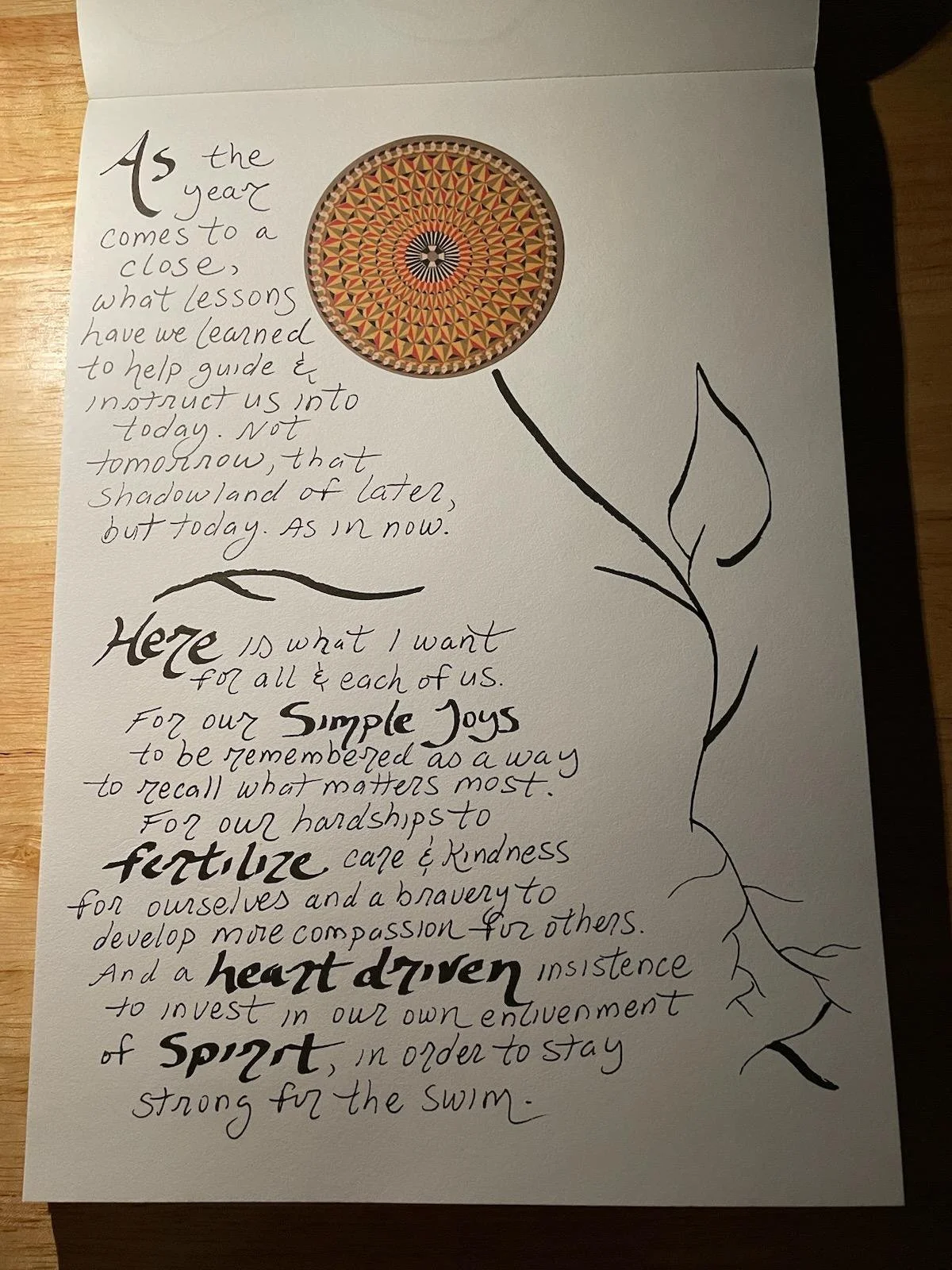
In a recent post I crafted on my personal practice blog, I wrote: “Sitting meditation is the practice of coming back home to ourselves…Attending sangha is the practice of generating a genuine felt sense of connection with one another as kin.” (To read the full post click here.) Being diligent in practicing sitting meditation every day and showing up to sangha every week is essential to keeping fresh, active & strong the spiritual dimension of my life. Without sitting and without sangha, I can’t imagine having the necessary inner resources in order to stay engaged with others and the world with a kind, caring, and open heart.
Now that we live an hour away from Missoula, showing up to my home sangha, Be Here Now, on Monday nights takes a little more doing. Still. Unless I’m sick (which isn’t often), I’m there. I consider my daily sitting practice and attending weekly sangha to be paramount to my wellness of being.
Yesterday, both Mike and I had what the monasteries in our tradition would call a Lazy Day. At the monasteries, Lazy Days are days with nothing scheduled (except for meals). There’s no wake up bell; no group sitting meditation practice in the morning; no working meditation; and no programs offered. Lazy Days are an opportunity to practice to enjoy having no where to go and nothing to do. It’s not that you can’t make plans or engage in activities, of course, but the invitation would be to involve yourself in whatever you do by genuine choice (not pressure or obligation) and with the quality of ease (not tension or rushing).
Self-care is a realm I practice in deeply. It’s also one of my favorite topics to write about and speak into. In my view, many common myths & misunderstandings (M&M) abound when it comes to all of the things I just mentioned: sitting, sangha & self-care. The M&M’s can be large obstacles on the path.
I find it telling about the mainstream messaging we receive here in the U.S that I’ve encountered so many people over the years when visiting Deer Park Monastery in southern California for whom Lazy Days were the toughest days to be confronted with. Most of us have no idea what the heck to do with ourselves when we don’t have kids to care for, work to keep us occupied or household upkeep to tend to. In other words, in my view, self-care is hard. It’s hard because we are so very unfamiliar with what it means, what it looks like, and how to do it. For many of us, being lazy is just the worst thing we can imagine. We carry fierce messaging within us that centers around: you can rest when you’re dead. Yikes!
It’s become clear to me that self-care can present in a myriad of ways. It can look like making time to do something you enjoy doing for no other reason other than you like doing it. It can look like making the hard call to say no to something you would like to do in order to get much needed downtime. It can look like leaving a little more wiggle room in your weekly schedule and not over-crowding your days with things to do and places to be. It can look like taking tech breaks or setting hours on when we text & email or putting limits on how often we check the news. It can look like smoking a little less weed or watching a little less TV or drinking a little less alcohol so as not to suppress our feelings or distance ourselves from ourselves. It can also look like upholding the rituals that nourish & sustain us even when we don’t particularly feel like it, like sitting & sangha, which is a thing that happens to all of us from time to time. One of the common M&M’s of both sitting & sangha is that both practices should be enjoyable and pleasurable all the time, which is so not the truth of the matter.
The practice of true self-care requires an understanding that sometimes what we are most in need of is to push ourselves a little bit in doing certain things we know would be good for us to do but we don’t feel like doing. Sometimes self-care looks like getting on my cushion even when I really don’t want to and showing up to sangha even when I’d rather not leave the woods and drive to town. Sometimes self-care involves being a loving friend to ourselves who ushers and encourages us to keep on keeping on with the things we know deep down will be good for us to do. A friend who isn’t swayed by the really good-sounding reasons & excuses we come up with not to do whatever it is.
One of the books I am reading right now is Everyday Zen by Charlotte Joko Beck. I am relatively new to Joko’s teachings and she has quickly become a guiding teacher for me. If she were still alive I would strongly consider traveling to the San Diego Zen Center to practice with her in-person. In a passage I read this morning, she said: “The quality of our practice is always reflected in the quality of our life. If we are truly practicing there will be a difference over time. Now one of the illusions we may have about our practice is that practice will make things more comfortable, clearer, easier, more peaceful, and so on. Nothing could be further from the truth…To do Zen practice, we have to desire a certain kind of life. In traditional terms, it’s a life in which our vows override our ordinary personal considerations: we must be determined that our lives develop a universal context and that the lives of others also develop that context. If we’re at a stage in our lives (and it’s not good or bad, it’s just a stage) in which the only thing that matters to us is how we feel and what we want, then practice will be too difficult.”
My encouragement, to both myself and others on the path of practice, is this: Keep sitting. Find a sangha (whether in person or online) and show up. And do both as an act of self-care, even on the days you don’t really feel like it.