
Recalibration
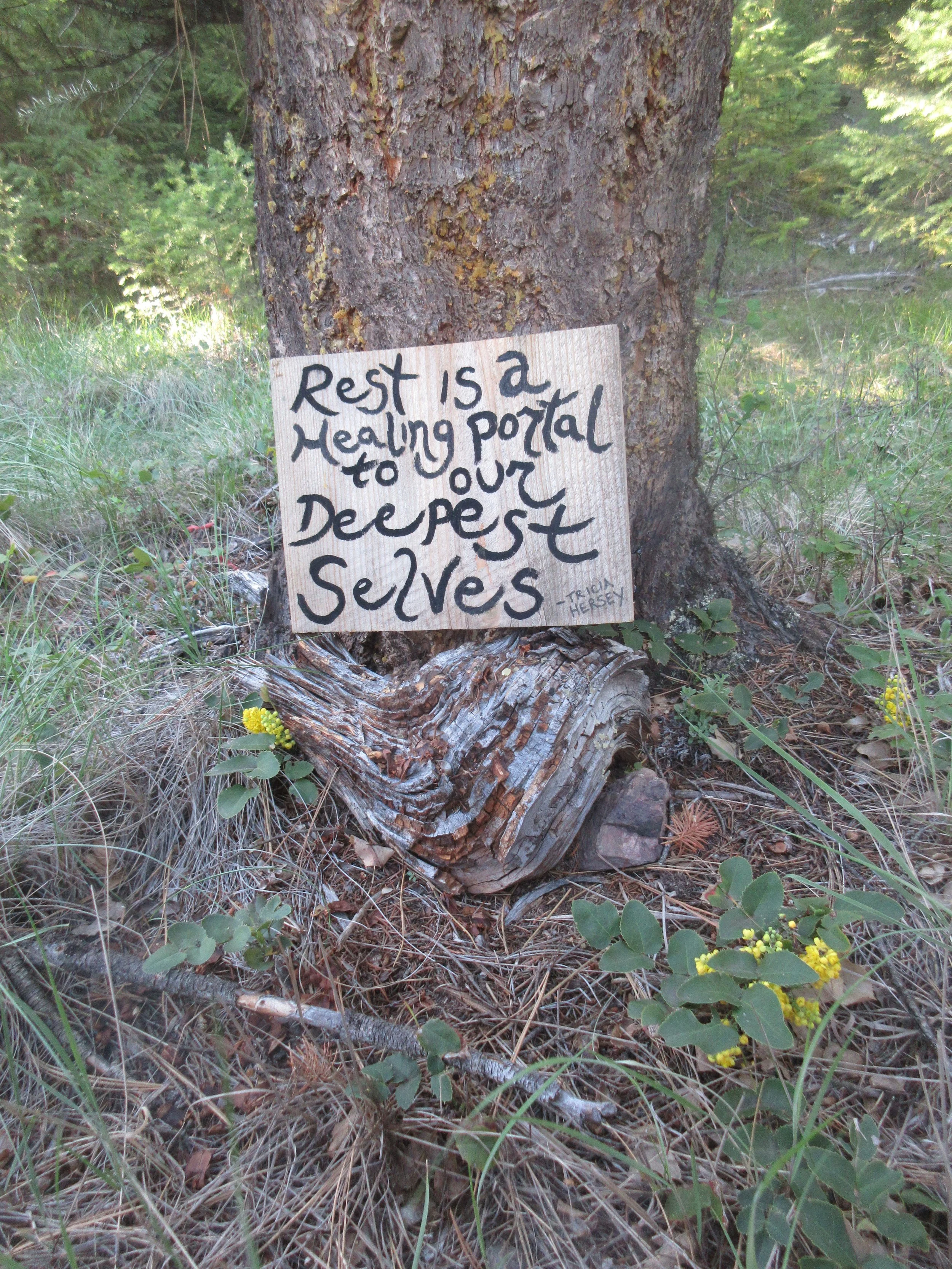
I like this word a lot. Recalibration. Often it refers to a machine or a device of some kind, but I like to dance wider with it. To me it speaks to the human process it takes to go from one thing to the next. The time and space needed to adjust to something new taking place and reestablish balance amid variations and changes in life. Whether it’s recalibrating to the season of springtime after the long months of winter - which is still active for me here in western MT (it snowed here at EM just yesterday) - or to one life chapter ending and another beginning, what’s clear to me is that recalibration takes time, and thus a certain kind of patience is required.
I find that when I am in recalibration mode, I often feel restless and upended. I am irritated easily and at times feel unsure of what to do with myself. For me it’s a real practice not to want to skip over the transition part and just leapfrog over to feeling balanced and grounded again. It’s a practice to give myself grace and space to feel awkward and off-kilter. And by “it’s a practice” I mean: it requires intentional effort and wholehearted diligence to actively train my thoughts, speech, and actions to align with my deepest values and aspirations.
I’m in recalibration mode at present on a few different levels. And I don’t mind telling you I don’t like it. But as I deeply value practicing to feel what’s real, vs. suppress or spiritually bypass or put a fake-happy spin on something, and one of my core spiritual aspirations is to befriend myself and meet the moment just as it is regardless of what’s happening, vs. wish it were some other way, just because I currently feel unmoored and uncomfortable doesn’t mean anything other than my practice continues.
I find it beneficial once in a while to ask myself the following questions: What does it mean to be a mindfulness practitioner? What does it mean to practice? Why am I walking a spiritual practice path? I think it’s important to ask myself these questions because of how easy it is to intellectualize the practices of mindfulness and meditation. How easy it is to read about it or study it or think about it but not put it into play and actually do it. And how easy it would be stop doing it when the going gets tough.
The “doing it” takes effort and energy. It takes consistency, structure, and diligence. It requires an understanding that a lot of the time it won’t be easy, but that fruits come from keeping one’s feet on the path and practicing even when we don’t feel like it. It took me a long time to develop this insight, but once I did it was incredibly helpful: If I stopped practicing every time I didn’t feel like it, eventually I would never do it.
Given the mainstream messaging all around us, it’s very easy to regard the action-based practices of deep mindful breathing, sitting meditation, and walking meditation as being trite, trivial or designed for beginners only. It’s easy to think these practices aren’t enough or aren’t very important in the grand scheme of life. But for those of us who deem ourselves to be mindfulness practitioners, it’s crucial that we not let ourselves fall prey to these lines of thinking. Mindful breathing, sitting & walking aren’t practices we graduate from at some point in order to move onto something else bigger & better. These practices are foundational and essential to the health & wellness of our overall practice.
When recalibration is a real thing happening, or when the going gets tough in some other way that throws us off-kilter, may we remember that this too is part of life and living, regardless of how much we dislike it. Nothing is separate from our practice. May we stay steady on the path. May our practice, with kindness and compassion for ourselves and others, continue.