
Picking Up Litter & Dualistic Thinking
It’s currently 33.3 degrees outside and 66.6 degrees inside our cabin at 9:11 AM as a I type this post on Monday morning. The sun is just now rising over our closest mountain and our PV panels will soon start collecting the magic of its light to charge our house batteries for the purposes of electricity. You know. Just in case you were wondering.
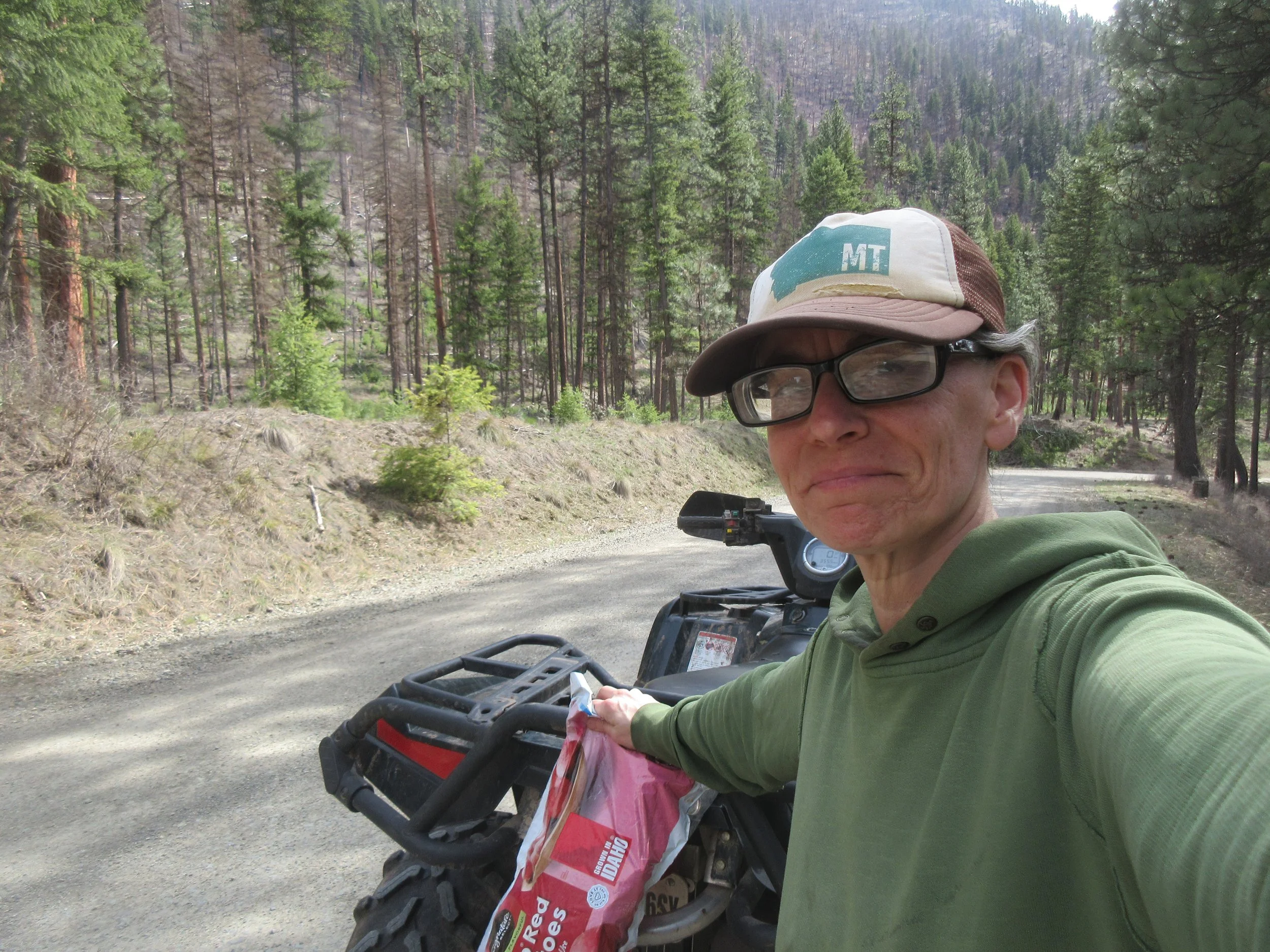
Yesterday, Sunday April 5, I took the ATV on a rideabout to collect all the litter on the side of our gravel road that piled up over the winter and got unearthed in the thaw of spring from the snow. It’s an annual cleanup I choose to do every year. While I very much dislike that litter accrues on a regular basis, especially for whatever reason over the winter, it is a common thing that happens here in our neck of the woods.
Turns out I didn’t bring along enough bags to collect as much trash as I would’ve liked. I filled two potato sacks worth and then had to call it quits and head back home. So a little more work is left for another day.
Every spring when I go out to pick up trash, it’s a practice not to become too sour about people who leave their litter behind in the woods. It’s disappointing and disheartening for sure, but I do my best not to hang out in that headspace for too long. I mean. The selfishness or thoughtlessness or apathy it takes to toss your cans out the window of a moving rig is not the underlying illness of man. It’s a common symptom and shut-down response to a lifetime of pain and suffering.
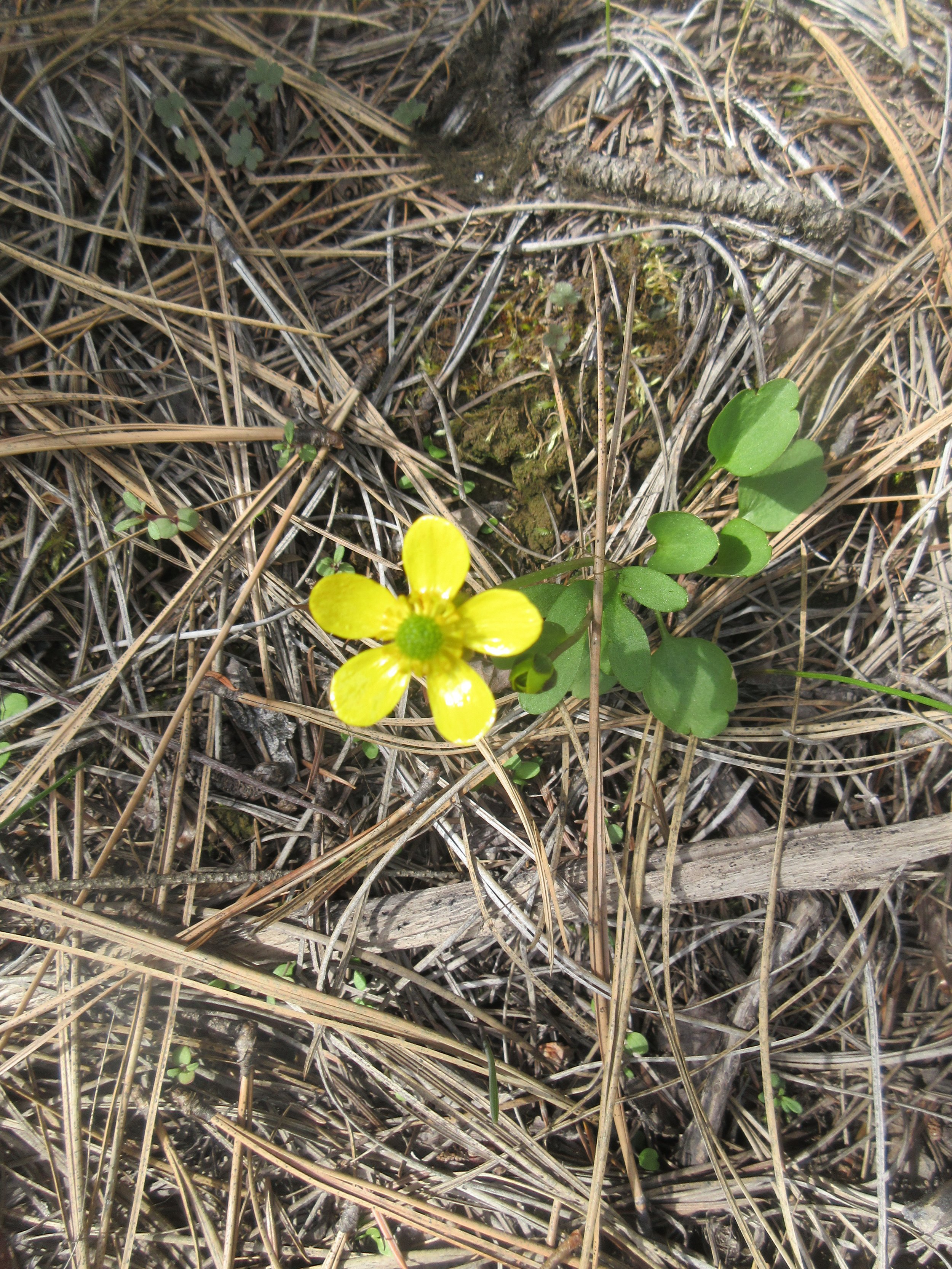
First buttercup flower of spring
Keep your heart open to others, I remind myself when I’m out there picking up beer cans on the side of the road. Because it’s mostly beer cans I find. When I get into the landscape of my heart, I am able to see more clearly how no action exists in isolation. I am also able to connect with the sorrow I feel on behalf of so many others who are incapable of enjoying a drive through or visit to the woods without intoxication efforts on board. And the reason this is so has nothing necessarily to do with a person’s lack of ability to connect with the wonders and beauty of nature, but the truth of how needing to numb out has become standard and status quo. The felt need for alcohol and/or weed especially is pervasive. The strong preference to exist elsewhere is common practice.
You might regard this waxing on as a digression but I see it as very much a part of the situation at hand. As my teacher, Zen Master Thich Nhat Hanh said: “We are here to awaken from our illusion of separation.”
One of the books I am currently reading is Zen Mind, Beginner’s Mind by Shunryu Suzuki, or Suzuki-roshi to his students. This book is a classic in Buddhist circles. It’s one of the very few and select books I will re-read. I give it read through every 2 or 3 years or so, which I think is a very good idea to do. On the very first page of the prologue, Suzuki-roshi says: “For Zen students the most important thing is not to be dualistic.”
Both master teachers are pointing to the same thing.
While to many of our western ears “dualistic thinking” is unfamiliar, abstract, and unclear, it can essentially be described as being under the strong impression that things and people can exist in a vacuum, disconnected and untethered from everything and everyone else. When we are stuck in dualistic thinking, we are trapped in the illusion of separation.
For example, for me to make the distinction that I am doing good because I’m picking up litter and those littering are bad and call it a day is weak sauce in terms of my practice. As soon as I separate myself as litter picker upper from the folks who litter (and also see myself as better for it) I ensnare myself in dualistic thinking.
The keystone of my own practice, and therefore the centerpoint from which I share and teach, is: There is no such thing as an insignificant moment. Which is another way of saying there is no such thing as a moment so small that it doesn’t create an impact or affect. Everything we do, say, and think, and everything we don’t do, say, and think matters and makes a difference. Which I consider to be extremely good news. Because it means that picking up litter once a year alongside our gravel road, even when I know it will accumulate again, is a valuable, beneficial, and caring thing to do. And that practicing to have understanding and compassion for my fellow humans, even when they do things I don’t approve of or like, is one of the ways I know my feet are firm on the path of spiritual growth and self-cultivation, however slow I may be going.